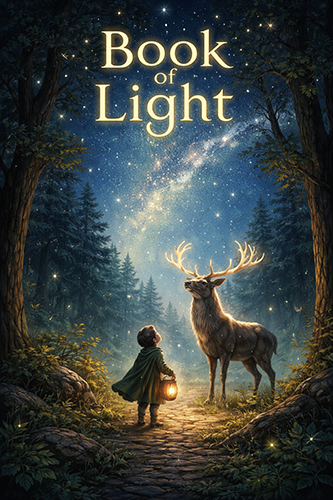
The Book of Light: Meaning for our Souls is a luminous mythic codex set in a far-future forest world shaped by memory, weather, and ritual. This gathering of wisdom, scripture, and blessings reminds us that the world has not lost its holiness; people have only forgotten how to arrive. When a malady known as the Great Hurry enters the soul, causing the world to thin and the inner light to retreat, the people of the Middle Forest must relearn the patient art of presence, relation, and return.
Through lyrical, interconnected parables, we follow figures such as Elen and Kael as they discover that profound spiritual truths are found not in escaping the world, but in inhabiting it more deeply. Children learn to pause at thresholds, hear the first hum beneath creation, read the frost’s quiet script, endure the white-blind heights, and return from wonder carrying light back into bowls, doors, bread, and breath.
At once myth, parable, and sacred literary fiction, this book explores what it means to remain human when life grows hurried, divided, and spiritually thin. Tender, philosophical, and quietly radiant, this codex offers not doctrine, but a lived remembering. It is not merely a book to be consumed, but a space to be inhabited—a deeply moving meditation on presence, wholeness, and the sacredness of right relation.
Keywords: mythicfantasy, spiritualfiction, philosophicalfantasy, Nonduality, mysticalfiction, fairytaleforadults, contemplativefiction, naturespirituality, mythicparables, visionaryfiction
“A rare and luminous trilogy that does not merely tell stories—it teaches the heart how to belong to the living world again.”
“These books feel less like reading and more like remembering something ancient, gentle, and deeply necessary.”
“The Middle Forest series is breathtaking in its quiet power: mythic, immersive, and full of wisdom that lingers long after the final page.”
“Few books make the ordinary feel this sacred. Thresholds, breath, firelight, grief, and kindness all become part of a deeper way of being human.”
“Tender, philosophical, and quietly transformative, this trilogy is a profound invitation to slow down, listen, and return to right relation.”
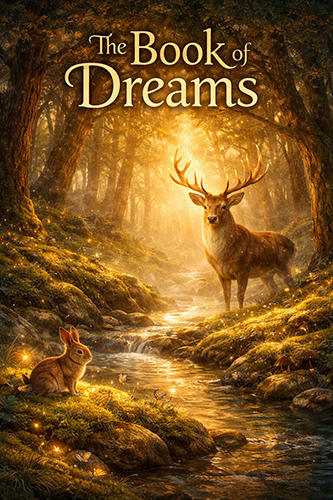
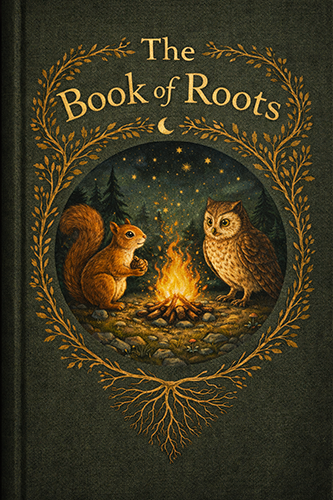
The Middle Forest Books Series
A Mythic Codex for the Living World
The Middle Forest Books Series is not merely a gathering of stories. It is a woven body of memory, warning, and return, shaped to help the heart find its place again in the living world. Set in a far-future forest world formed by weather, ritual, and remembrance, the trilogy follows a quiet and deliberate deepening, leading the reader away from severance, haste, and forgetfulness, and back toward patience, reverence, and right relation.
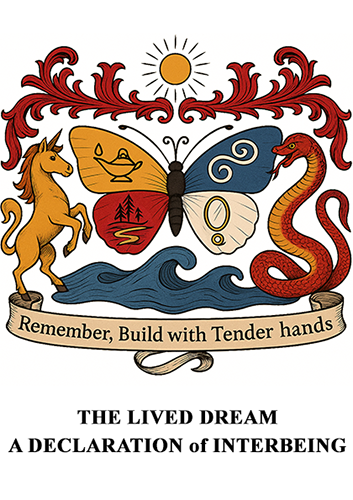
At the heart of the series lies the old struggle between the Taking-Spirit of the Ash-Eaters and the mending wisdom of the Middle Forest. Again and again, the books return to the image of the Loom: the truth that the world has no edges, and that every gesture, every harm, every kindness is a pull upon a living thread that trembles through the whole weave.
The Deep Pattern of the Codex
Across the three books, the story is always doing more than one thing at once, though it never needs to announce this loudly. On the nearest level, the children live among ordinary troubles that any child might know: crowded benches, curious hands, broken things, small mistakes, questions asked at the wrong moment and answered at the right one. These give the tales their warmth and nearness. Yet beneath such simple moments, the old wound of the world is always present. The ruins of the Ash Age remain in half-remembered forms: broken workings, dead machines, stone hives, iron scars, and the old severing that taught people to move their hands as though the world were not alive around them. And deeper still, each tale carries a teaching about how human beings must live if they wish to remain human at all.
By the end of the series, a quiet pattern has been laid down. Life must be kept at a scale the heart can still know. Power must remain within limits, or it forgets reverence. What is near must be loved and tended. What is broken must be mended before it is cast aside. And the self must be remembered not as a thing apart, but as one living thread within a greater weave.
Tender, philosophical, and quietly radiant, the trilogy becomes a deep proof that to remain human is to learn again where the hand belongs. The world was never dead matter. It only waited for people patient enough, gentle enough, and awake enough to enter it rightly, until once more it could be felt as one holy field.




_Cover_1B42L8_400.jpg "Climate Change and Its Effects - The Rising Stakes in the 21st Century (Updated November 2023) 1B42L8")


_FINAL_Merged_500.jpg.png "Autonomous Warriors 1B42L8")

